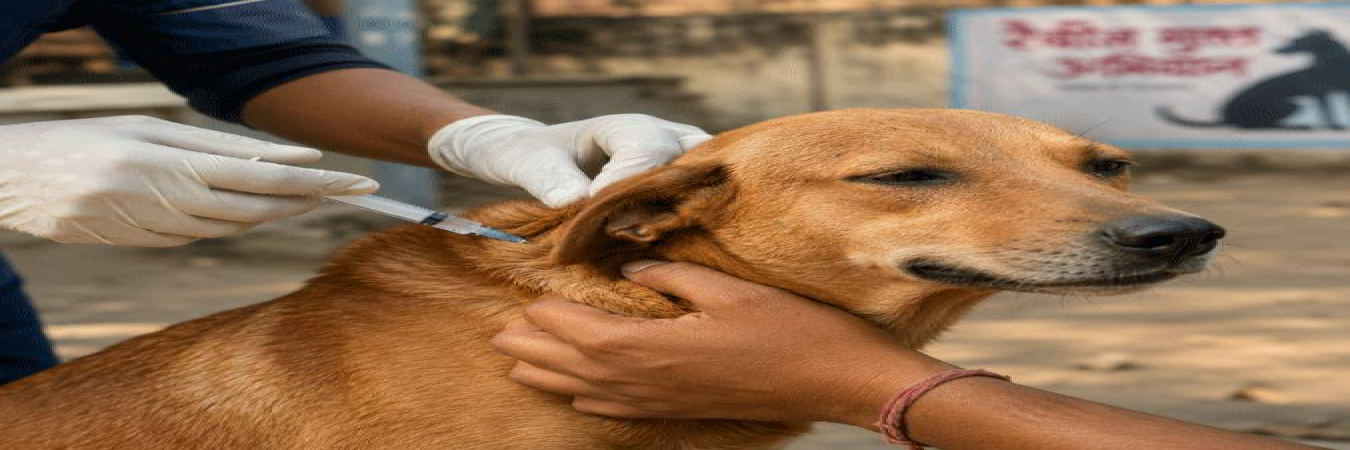
f left untreated, rabies infection is 100% fatal, however many of the poorest people are simply unable to access any post-exposure prophylaxis (PEP) or biologicals (rabies immunoglobin) at all. These communities also rarely benefit from dog vaccination programs.
It is estimated that if no additional measures were taken, one million people would die from rabies between 2020 and 2035. That estimate was made before the Covid pandemic, which significantly set back all public health services, including rabies control.
Barriers to progress include lack of sustained planning and funding around rabies control, lack of political engagement, weak data, lack of surveillance and reporting, inconsistent demand for canine vaccine and high cost and unequal access to PEP. Dog vaccination, a key element of rabies control, often falls ‘between the cracks’ of public health, agricultural and veterinary sectors and is often left to under-resourced local government authorities.
Yet vaccines against rabies have existed for over 100 years. The disease is 100% preventable and human deaths from the disease have been eliminated in most of Europe and North America.
Advanced practice nursing, Ambulatory nursing care
Advanced practice nurse, Cardiothoracic surgeon
Accreditation in progress
Testing update disclosure after activate course
Author
Dr. Choitali Goswami, MD
Dr. Choitali Goswami is an assistant professor at the Department of Forensic Medicine and Toxicology at JIS School of Medical Science and Research. She has received training on 'Forensic examination of sexual assault cases' from the National Institute of Criminology and Forensic Science, New Delhi. She brings extensive experience in medicolegal practice, including conducting autopsies, delivering lectures and practical training to undergraduate medical students, performing medico-legal examinations, and serving as an expert witness in court proceedings. Her research contributions in the field are available on her ResearchGate profile.
Peer reviewer
Emma McGuire
Emma McGuire is a clinical fellow in Infectious Diseases and Microbiology at UKHSA and an honorary Infectious Diseases and Microbiology specialty training registrar at Guy’s & St Thomas’ NHS Foundation Trust.
Emma McGuire
Emma McGuire is a clinical fellow in Infectious Diseases and Microbiology at UKHSA and an honorary Infectious Diseases and Microbiology specialty training registrar at Guy’s & St Thomas’ NHS Foundation Trust.


 Duration:
01:00 hour
/
Duration:
01:00 hour
/
 Fee:
FREE
Fee:
FREE



 Comments (1)




 Share
Share
 Email
Email
 0
0